
 English
 Views: 0 Author: Site Editor Publish Time: 2025-12-10 Origin: Site


Whether you are scaling a big wall in Yosemite or tackling your first outdoor lead at the local crag, safety gear is non-negotiable. While most climbers obsess over the fit of their shoes or the comfort of their harness, the fit of your climbing helmet often gets overlooked.
A helmet is your primary defense against rockfall and head impact during a fall. However, even the most expensive, high-tech helmet won't protect you effectively if it doesn't fit your head correctly. A poorly fitted helmet can slide back, exposing your forehead, or slip forward, obscuring your vision at a critical moment.
Finding the perfect fit involves understanding sizing, adjusting the suspension system, and knowing exactly what to feel for when you put it on. This guide will walk you through everything you need to know to ensure your helmet stays secure so you can focus on the climb.
It is tempting to pick a helmet based on color or how cool it looks in photos. While aesthetics are fine, the mechanics of safety rely entirely on fit.
If a helmet is too loose, it can shift during a fall. Imagine taking a whipper and hitting the wall; if your helmet has slid to the side, your temple or skull is exposed to the rock. Conversely, a helmet that is too tight can cause headaches. When you are three pitches up a multi-pitch route, a tension headache is a distraction you cannot afford.
The goal is a "Goldilocks" fit: snug enough to stay put without the chin strap, but comfortable enough that you forget you are wearing it.


Before you start shopping online or heading to the gear shop, you need a baseline measurement. Climbing helmet sizes generally cover a range of head circumferences, usually measured in centimeters.
To measure your head:
Get a flexible tape measure. If you don't have one, use a piece of string and then measure the string against a ruler.
Position the tape. Wrap it around the widest part of your head. This is typically just above your eyebrows and ears, going around the slight bump at the back of your skull.
Check the chart. Most manufacturers offer two sizes (S/M and M/L). Compare your measurement to the brand's specific sizing chart.
If you fall right on the border between two sizes, it is usually better to size up. This allows room for a beanie underneath during colder climbing days.
Once you have a helmet in your hands, the first test happens before you even buckle the chin strap. This is often called the "Shake Test."
Open the adjustment system fully. Most modern helmets have a dial or a slider at the back. Loosen it all the way before putting the helmet on.
Place it on your head. It should sit level, covering your forehead without blocking your vision. The rim should be about two fingers' width above your eyebrows.
Tighten the suspension. Crank the dial or pull the sliders until the internal band feels snug around your head. It shouldn't be painful, but it should feel firm.
Shake your head. Lean forward and shake your head side to side and up and down.
The Result: The helmet should stay in place. If it slides off or shifts significantly without the chin strap buckled, it does not fit your head shape or size properly.
The chin strap is the secondary retention system. It prevents the helmet from being knocked off your head during a violent impact.
Once you have passed the shake test, buckle the strap. It should create a "Y" shape around your ears. The straps should not rub against your earlobes, as this will cause irritation over time.
Adjust the tension under your chin. You want it snug, but not choking. A good rule of thumb is that you should be able to fit one or two fingers between the strap and your chin. If you open your mouth wide (like you are shouting "Take!"), the helmet should pull down slightly on the top of your head, but the strap shouldn't choke you.
Not all heads are shaped the same, and neither are all helmets. Some heads are rounder, while others are more oval.
Rounder Heads: You might find that some helmets pinch at the temples but leave gaps at the front and back. Look for brands known for a wider fit.
Oval Heads: You might experience pressure on the forehead while having space on the sides.
If you find a helmet that is the "right size" according to the chart but creates pressure points after five minutes of wear, it is likely the wrong shape for your head. Try a different brand. Fit is highly subjective to head geometry.
If you have long hair, how you wear it impacts helmet fit. A high ponytail or bun can interfere with the rear suspension system (the plastic band that cradles the back of your head).
Many modern helmets are "ponytail friendly," featuring a dipped design in the rear adjustment band to accommodate hair. Always test the helmet with your hair in the style you typically wear for climbing. If you usually braid it low, test it that way.
If you plan on ice climbing or mountaineering, you will need to wear a warm hat or a balaclava under your helmet.
When sizing a helmet for cold weather pursuits, ensure the adjustment system has enough range to expand. If you buy a helmet that is maxed out on the largest setting just to fit your bare head, you won't be able to fit a beanie underneath it later.
Even a perfectly fitted helmet won't last forever. You should replace your climbing helmet if:
It sustains a major impact. Even if you don't see cracks, the internal foam (EPS) may be compromised.
You see visible damage. Cracks, dents, or significant wear on the straps.
It is old. UV rays and general wear degrade materials over time. Most manufacturers recommend replacing helmets every 5 to 10 years, even without major impacts.
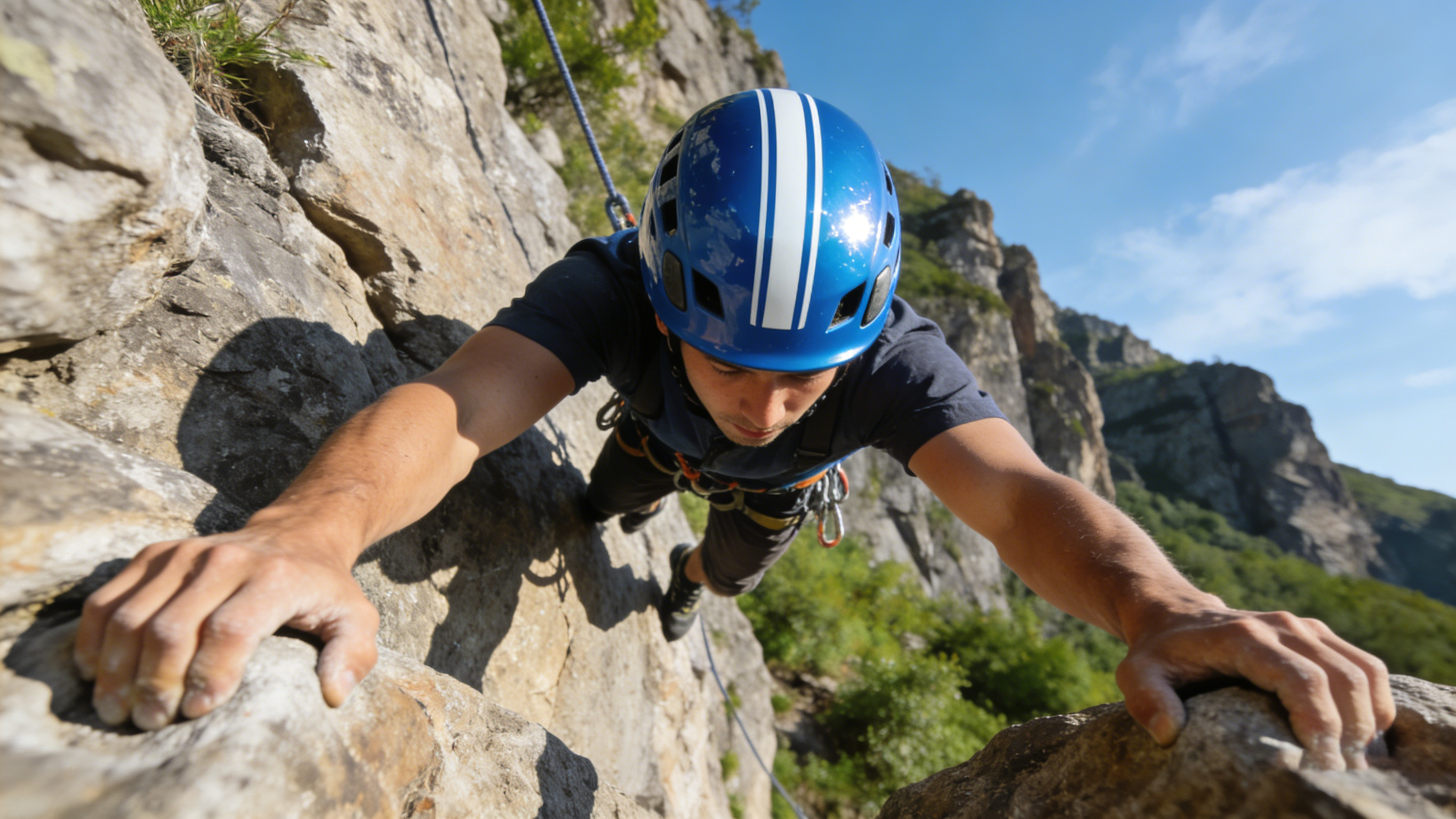
Your brain is your most important piece of climbing gear. Protecting it requires a helmet that sits level, stays secure, and feels comfortable enough to wear all day. By following the shake test and ensuring your chin strap is adjusted correctly, you can climb with confidence knowing you are protected.
Don't rush the buying process. Try on multiple brands and models until you find the one that feels like it was made for you.


