
 English
 Views: 0 Author: Site Editor Publish Time: 2025-10-28 Origin: Site


Mountain biking pushes your limits. Whether you're navigating technical singletracks or bombing down rocky descents, the right helmet can make all the difference between a great ride and a trip to the emergency room.
But walk into any bike shop and you'll face a wall of options. Full-face or half-shell? MIPS or standard? How much should you spend? This guide cuts through the confusion and helps you find a helmet that matches your riding style, budget, and safety needs.
Half-shell helmets are the most common choice for cross-country and trail riding. They're lightweight, well-ventilated, and offer adequate protection for moderate speeds and technical terrain. Most feature extended rear coverage compared to road helmets, protecting the back of your head during falls.
These helmets work best when you're riding upright on trails without massive drops or high-speed descents. They typically weigh between 250-350 grams and include 15-25 vents for airflow.
Full-face helmets provide maximum protection by enclosing your entire head, including your chin and jaw. Downhill racers and bike park enthusiasts favor these helmets because they're designed for high-speed crashes and serious impacts.
The trade-off? They're heavier (800-1200 grams), hotter, and restrict your field of vision slightly. But if you're regularly hitting jumps, drops, or steep technical descents, this extra protection is worth it.
Convertible helmets offer the best of both worlds. You can remove the chin bar when climbing, then snap it back on for descents. This versatility makes them popular with enduro riders who pedal uphill but need full-face protection on the way down.
Keep in mind that convertible helmets are heavier than standard half-shells (usually 600-800 grams with the chin bar attached) and cost more. They're a smart investment if your rides include both technical climbs and aggressive descents.
Safety should drive your helmet decision. Here are the critical features that separate adequate helmets from exceptional ones.
MIPS (Multi-directional Impact Protection System) adds a low-friction layer inside the helmet that allows it to rotate slightly during angled impacts. This rotation reduces the rotational forces transferred to your brain, which can cause concussions and other serious injuries.
Research shows that MIPS can reduce rotational motion by up to 40% in certain impacts. While MIPS helmets cost $20-50 more, the added protection is worthwhile. Not all crashes involve straight-on impacts, and MIPS addresses the reality of how most accidents occur.
Look for helmets that meet or exceed safety certifications. In the U.S., this means CPSC certification at minimum. European riders should check for CE EN 1078 certification. Full-face helmets should also meet ASTM F1952 or ASTM F2032 standards.
These certifications ensure the helmet has passed rigorous impact testing. Skip helmets without proper certification, regardless of how good they look or how cheap they are.
Mountain bike helmets should provide more coverage than road helmets. Look for extended protection at the back of your head and around your temples. These areas are vulnerable during the backward falls common in mountain biking.
Some helmets also include koroyd or similar materials in high-impact zones. These crumple zones absorb energy during crashes, reducing the force transmitted to your skull.
A helmet only protects you if you wear it, and you'll only wear it if it fits comfortably.
Measure your head circumference just above your eyebrows. Most manufacturers provide sizing charts, but sizes vary between brands. A medium in one brand might fit like a large in another.
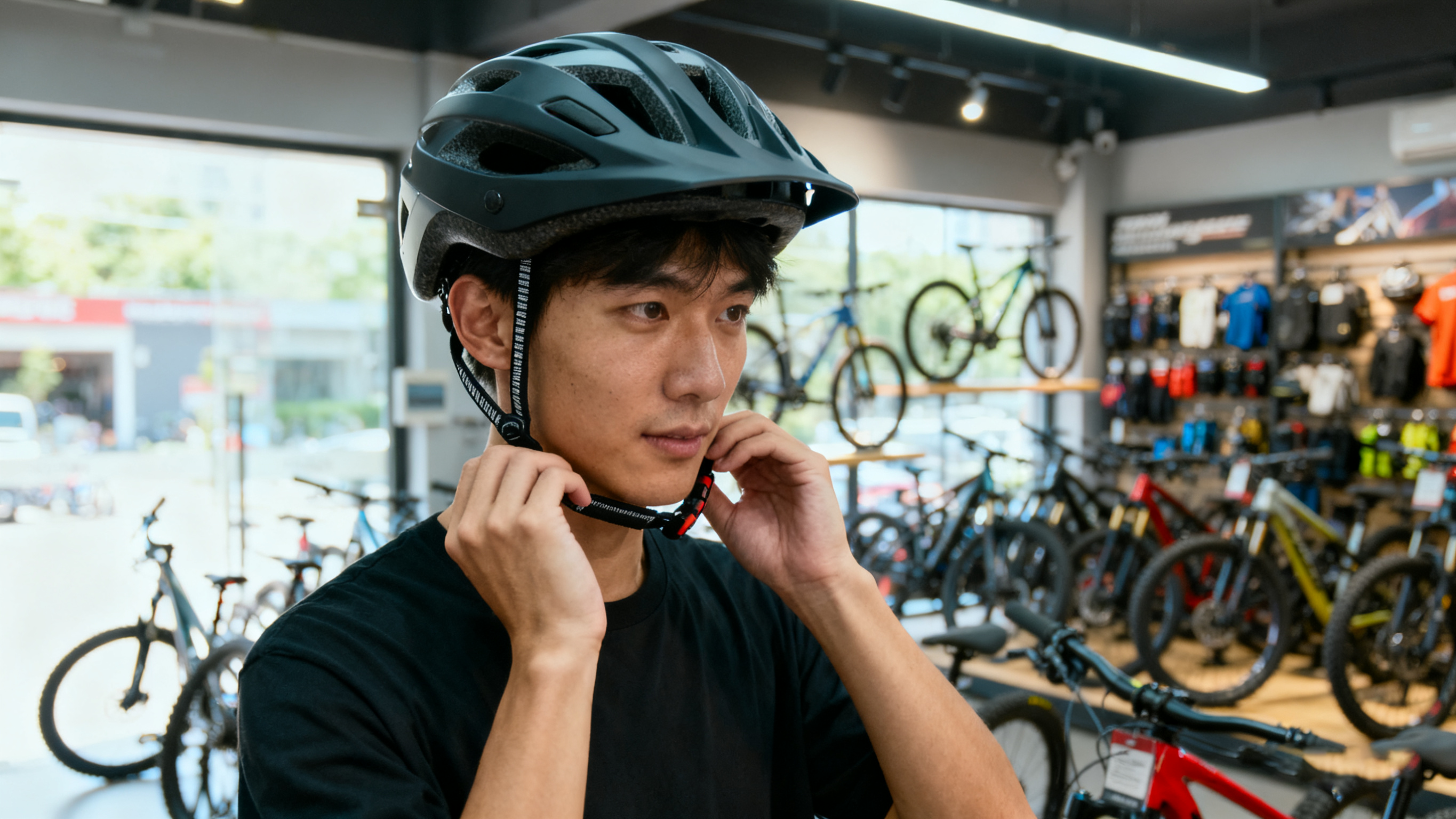
When trying on a helmet, it should feel snug but not painful. Shake your head vigorously—the helmet should stay in place without shifting. If it moves, try a smaller size or adjust the fit system.
Quality helmets include dial or ratchet adjustment systems that let you fine-tune the fit. These systems typically sit at the back of the helmet and allow micro-adjustments even while riding.
Look for helmets with vertical adjustment options too. Your head shape matters, and being able to adjust both horizontal and vertical fit ensures optimal positioning.
Comfort depends heavily on padding quality and ventilation. Removable, washable pads are essential since mountain biking is sweaty work. The ability to wash your helmet's interior keeps it fresh and hygienic.
Ventilation becomes crucial on long climbs or hot days. More vents don't always mean better cooling—vent placement and internal channeling matter more. Try to find reviews or test helmets yourself to gauge ventilation effectiveness.
Beyond core safety and fit, several features can enhance your riding experience.
Most mountain bike helmets include visors to shield your eyes from sun, rain, and trail debris. Adjustable visors let you position them for different riding positions and lighting conditions. Some riders remove visors entirely, so check if yours is easily detachable.
If you ride in dusty conditions or at bike parks, you'll want a helmet compatible with goggles. Full-face helmets accommodate goggles naturally, but half-shell helmets need adequate room around the brow and strap channels that work with goggle straps.
Many helmets now include mounts for action cameras. These integrate cleanly into the helmet design without compromising safety or adding bulk. If you film your rides, this feature saves you from using adhesive mounts that might damage your helmet.
Mountain bike helmets range from $40 to over $400. Here's what you get at different price points.
Budget ($40-$80): Basic protection with CPSC certification. These helmets lack advanced features like MIPS but still meet safety standards. Good for casual riders or those just starting out.
Mid-Range ($80-$150): This sweet spot includes MIPS protection, better ventilation, and improved adjustment systems. Most trail riders find everything they need in this range.
Premium ($150-$300+): High-end helmets offer the latest safety technology, premium materials, reduced weight, and superior ventilation. Competitive riders and those who ride frequently benefit most from these features.
Remember that a more expensive helmet isn't automatically safer. All certified helmets meet minimum safety standards. Premium models offer refinements in comfort, weight, and advanced protection systems.
Replace your helmet immediately after any significant impact, even if you can't see visible damage. The protective foam compresses during impacts and may not protect you adequately in subsequent crashes.
Even without crashes, replace your helmet every 3-5 years. UV exposure, sweat, and general wear degrade materials over time. Check your helmet regularly for cracks, loose parts, or compressed foam.
Choosing the right mountain bike helmet comes down to matching protection level with your riding style, ensuring proper fit, and selecting features that matter for your trails.
Start by determining which helmet type suits your riding. Then prioritize safety features like MIPS and proper certification. Finally, ensure you achieve a comfortable, secure fit before you buy.
Your helmet is the most important piece of safety equipment you'll own. Take time to find one that protects you properly and fits well enough that you'll wear it on every ride.


